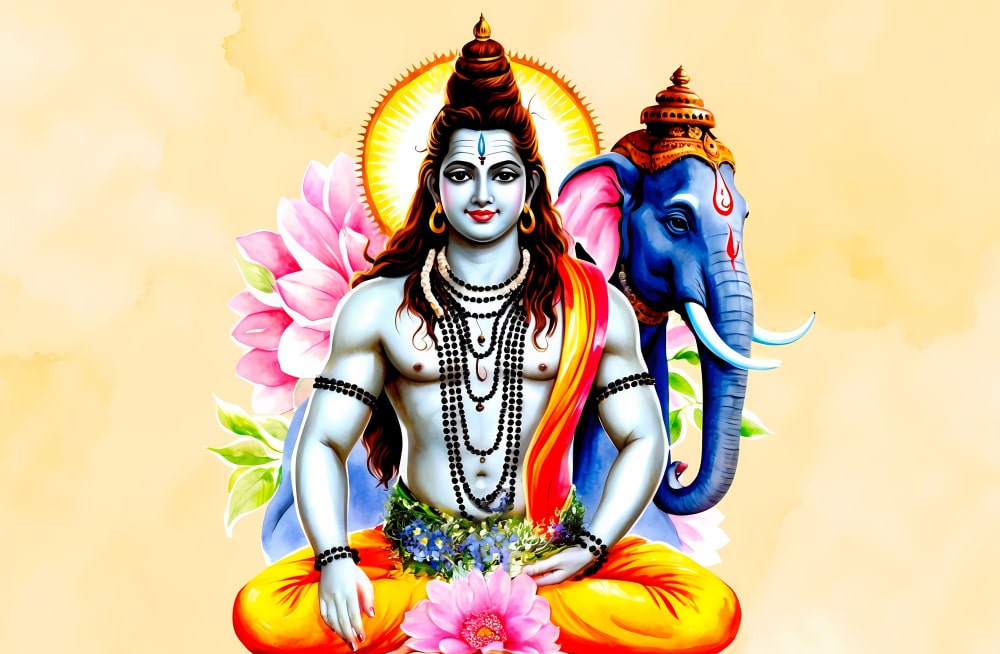
Lord Shiva, one of the most revered and complex deities in Hinduism, represents the divine trinity of Brahma (the Creator), Vishnu (the Preserver), and Shiva (the Destroyer) known as the Trimurti. His unique role as the destroyer of evil and the one who facilitates transformation makes him a figure of immense importance in the spiritual, mythological, and cultural landscapes of India and beyond.
The Essence of Lord Shiva
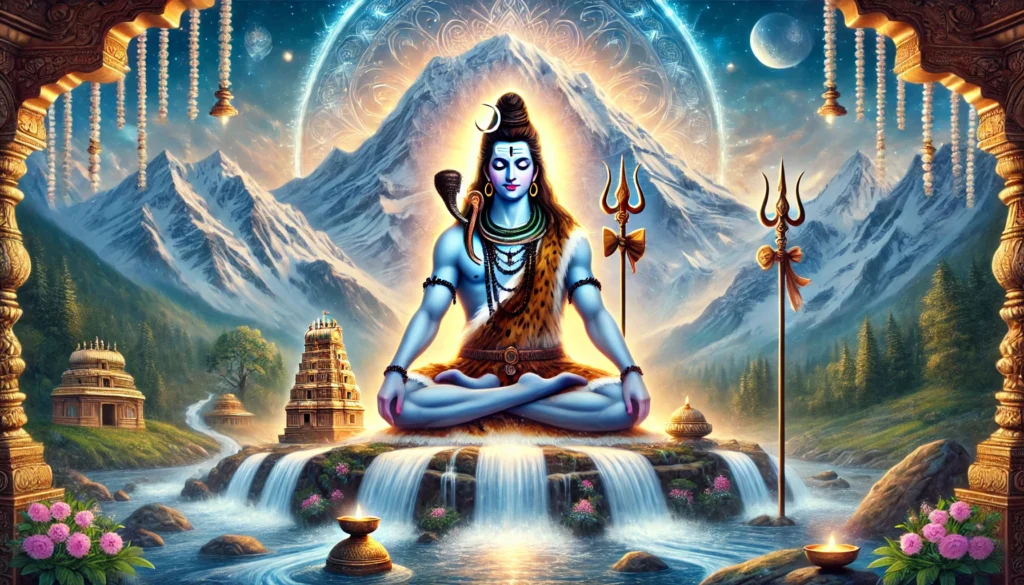
Shiva’s persona is multifaceted, encompassing both ascetic and householder traits, and his symbolism transcends the physical realms. He is often depicted with a third eye, a symbol of higher consciousness, and a serpent coiled around his neck, signifying his control over desire and fear. His matted hair is associated with the Ganga River, which flows from his locks, bringing purity and life to the world. His abode on Mount Kailash symbolizes his detachment from material desires, yet his involvement with the world shows his role as the ultimate protector and destroyer.
Shiva’s Role as the Destroyer and Regenerator
Shiva’s role as the destroyer is often misunderstood. It is important to recognize that destruction, in the context of Shiva’s role, is not negative. In Hindu philosophy, destruction is an integral part of the cycle of life. Destruction is a prerequisite for regeneration, paving the way for new creation and transformation. Without destruction, renewal and growth would be impossible.
Shiva’s dance, known as the Tandava, is a cosmic act of destruction and creation. It symbolizes the constant rhythm of life, where everything must come to an end before something new can emerge. His dance is a metaphor for the impermanence of life and the inevitability of change, making him a force of both preservation and dissolution.
Lord Shiva: The Source of All
Shiva is also regarded as the source of all existence, the one who embodies consciousness (Purusha) and energy (Shakti). He is often depicted in meditation, absorbed in deep thought, representing his introspective nature and his connection to the universe. He is both the immanent and transcendent being, capable of both withdrawing from and engaging with the world. This paradoxical nature of Lord Shiva makes him accessible to his devotees in various forms—whether as a meditator, a loving husband to Parvati, a father to Ganesha and Kartikeya, or as the cosmic dancer.
The Symbolism of the Lingam
The Shiva Lingam, a central symbol of Lord Shiva, represents the formless aspect of God. It is believed to signify the infinite nature of Shiva, who is beyond form and duality. The lingam is often worshipped with offerings of water, milk, and flowers, as a way to connect with this divine energy. The worship of the Shiva Lingam is an ancient practice, dating back thousands of years, and remains a central aspect of Hindu ritual.
Lord Shiva in Mythology
The rich tapestry of Lord Shiva’s mythology is woven with various stories that highlight his divine qualities. One of the most famous stories is the tale of how he consumed the deadly poison during the churning of the ocean (Samudra Manthan). This poison, which could destroy the universe, was swallowed by Shiva to protect the world, and it turned his throat blue, earning him the name Neelkanth (the blue-throated one).
Another well-known myth is his marriage to Parvati, the daughter of the mountain king, Himavan. Despite being a god of austerity, Shiva was deeply moved by Parvati’s devotion and love, leading to their union and the birth of their children, Ganesha and Kartikeya. This story exemplifies his ability to balance his ascetic life with his familial responsibilities.
Shiva’s Devotees and Worship
Lord Shiva is deeply adored by millions around the world. His devotees, known as Shaivites, engage in various forms of worship such as chanting his sacred mantra “Om Namah Shivaya,” offering prayers, and participating in grand festivals like Maha Shivaratri. This festival, celebrated annually, marks the day when Shiva is believed to have performed the Tandava and is an occasion for devotees to fast, meditate, and seek his blessings for transformation and spiritual awakening.
Shiva’s compassion for his followers is often depicted in stories where he grants boons and protection. He is known to be particularly merciful toward those who are sincere in their devotion, regardless of their past misdeeds. His followers believe that Lord Shiva is quick to forgive and bestows blessings upon those who seek him with a pure heart.
The Timeless Relevance of Lord Shiva
In today’s world, Lord Shiva’s teachings are still relevant. His message of detachment, self-control, and introspection resonates with individuals seeking peace and meaning in an increasingly chaotic world. As a deity who embodies both the destructive and creative forces of the universe, Lord Shiva teaches us that life is a cycle of continuous change. Embracing both the light and dark aspects of life is essential for spiritual growth and inner peace.
In conclusion, Lord Shiva remains a timeless and universal figure in Hinduism, representing the eternal dance of creation, preservation, and destruction. His teachings inspire countless individuals to transcend materialism, seek spiritual wisdom, and embrace the cyclical nature of existence. Through his various forms and stories, Lord Shiva offers an unwavering source of guidance, protection, and divine love.